What you actually control
Set your stake before you spin. Auto repeats spins, while Turbo and reel acceleration change how the spin looks. Sound has its own control. Buy Bonus charges a higher bet for a guaranteed starting tool. See the controls and Bonus Buy table for the four prices we saw.
The stake sets what you spend on the round. Faster play and Auto can make you spend it sooner, and the Rules give no indication that either improves the odds. You can stop before placing another bet.
Practical tips for understanding a first session
Use the demo to learn which numbers to watch:
- Open the official demo instructions and identify the balance units before treating a displayed amount as money.
- Read the chosen stake and distinguish a single Spin from an Auto sequence. Check optional purchase costs separately instead of assuming they are included in the normal stake.
- Follow tool HP, block HP and the award total as different quantities. A repair restores durability; an award comes from a destroyed reward-bearing block.
- Subtract the stake from the settled payout. A positive payout can still leave you down. The worked examples show how.
- Decide whether the automatic mining sequence offers the kind of interaction you want. If you expected steering, a documented free choice of tool or manual cash out, reread the controls before relying on that assumption.

Mistake: choosing the best pickaxe guarantees profit
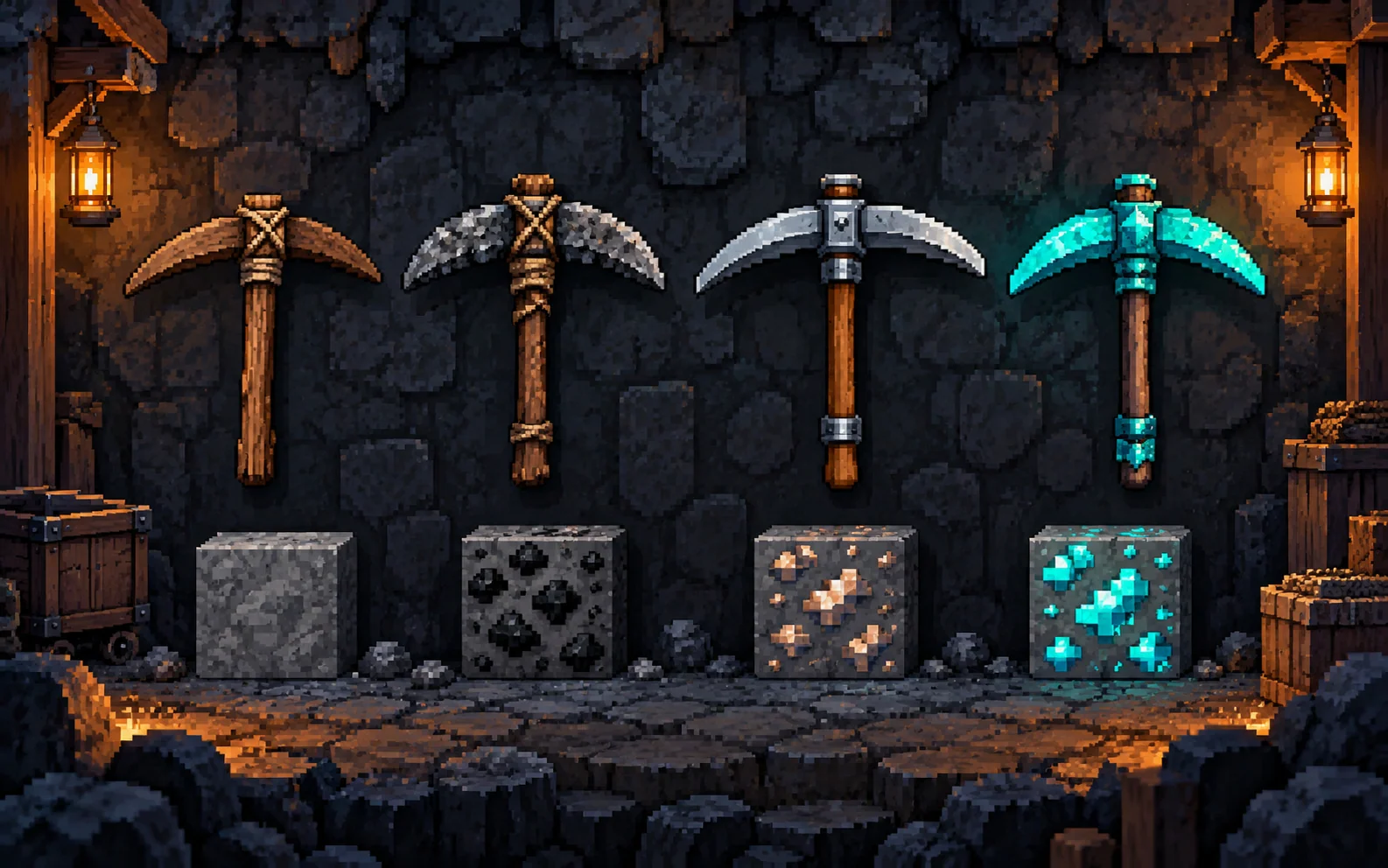
In the standard sequence the reel awards the pickaxe. The controls do not offer a documented free choice of tier. Diamond has the largest starting HP, but more durability does not tell you which ores it will destroy or what the final award will be.
The tool reference tells you how much damage each tool can take and how repairs work. To judge what a purchase is worth, you’d also need the price, the rules and the outcome probabilities.
Mistake: seven Cross outcomes make the next spin profitable
After seven consecutive Cross outcomes, Pixmove’s Rules say the eighth spin awards a pickaxe. They don’t say which tier you’ll get or whether it will earn enough to cover the next bet or the seven earlier ones.
The starting reel can therefore depend on earlier spins. The Rules don’t say whether the counter survives a new session or a stake change.
Mistake: larger size means multiplied winnings
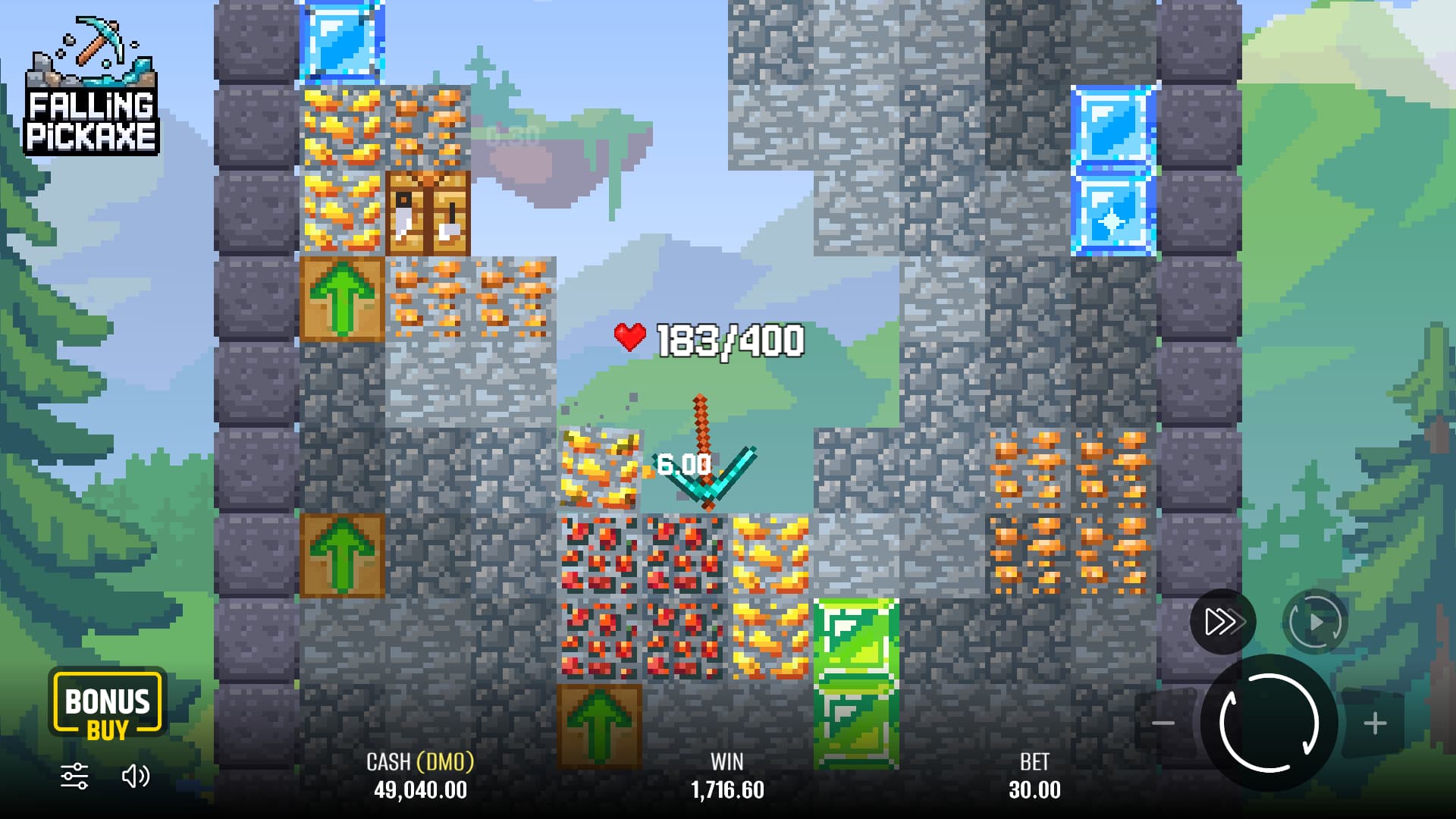
Upgrade Arrow changes the tool’s dimensions, up to the sizes described in the Rules. It does not apply those size figures to the payout. Workbench repairs and upgrades the current tool; TNT clears a surrounding area. None of these descriptions supplies a guaranteed profit.
The result is tied to the destroyed reward-bearing blocks. A visually dramatic fall, explosion or repair is not enough to calculate a future award. Use the paytable only after supplying the assumed or known block rewards.
Mistake: a predictor can read the next fall
The reviewed sources provide no supported predictor, timing signal or public sequence that identifies the next payout. A service claiming to infer a guaranteed result from previous animations needs evidence beyond selected screenshots or a winning example.
RTP and maximum win give you no way to identify the next tool, field or payout. Neither does reading the animation. See RTP and unknown odds for the figures Pixmove publishes.
Mistake: increasing stakes recovers earlier losses
A larger stake increases the amount at risk. The Rules do not promise that the next payout will cover earlier stakes, even when a pickaxe is guaranteed after the specified Cross sequence. A progression of bets cannot make that guarantee mean profit.
If you play for money, set a time limit and a budget you can afford to lose. Count feature purchases in that budget and stop when you reach either limit. If you find yourself raising the limit to win money back, stop playing. You can read the rules or open the demo without depositing.
Frequently asked questions
Can demo practice establish a profitable system?
No. Demo practice helps you learn the controls. It can’t prove an advantage or show that every paid client uses the same settings.
Can a calculator still be useful?
Yes. It can calculate payouts from known block awards or add up your spending. Predicting the next round or choosing a winning sequence would require odds we don’t have.
Does a longer fall prove I made a better decision?
No. The inspected controls do not establish player steering. Awards are described through destroyed reward-bearing blocks, not through a separate guaranteed depth multiplier.
Sources and scope
Pixmove’s product page gives the published figures. We read the English Rules in the demo to check how the game works. The dates below show when we consulted each source. We didn’t test paid rounds, autoplay, purchases or withdrawals.
- Pixmove product pageProvider statement · consulted 2026-10-16
Pixmove’s published game figures and description. We didn’t independently audit its mathematics.
- Rules in Pixmove’s official demoOfficial Rules · consulted 2026-10-16
We opened Play Demo and read the English Rules on 16 October 2026. They cover the reel, HP, awards, effects, controls and settlement. We didn’t spin, start Auto or buy a feature. The client showed no build number.
- Pixmove official demo: Buy Bonus menuProvider statement · consulted 2026-10-19
Buy Bonus showed Wooden, Stone, Iron and Diamond at 100, 150, 200 and 400 HP. At 10 DMO the bets displayed were 29.90, 56.50, 84.40 and 105.00. At 30 DMO they were 89.70, 169.50, 253.20 and 315.00. The menu showed a 10–20,000 DMO base-bet range. We didn’t press ACTIVATE, Spin or Auto. These are demo prices and limits. We didn’t audit the feature’s RTP.

Written by
Mark Roberts writes the English guides to Falling Pickaxe and compares it with other mining games.
Published